Search

Girl From Goat Pasture Road

Musings of Susan Swicegood Boswell

Category

Uncategorized

At The Movies…


ashamed-girl-with-a-bag-on-her-head-10054806

My book club,  The Key West Girls met today to discuss Brene Brown’s I Thought it Was Just Me (But it Isn’t).  Ms. Brown is a writer and research professor at the University of Houston Graduate School of Social Work. Her ground-breaking studies on the subjects of shame and vulnerability have gained her international attention thru several Ted Talks, a PBS Special and a guest appearance on Oprah’s Super Soul Sunday. If you are not familiar with her work, check out the links below.

http://www.ted.com/talks/brene_brown_on_vulnerability.html

http://www.ted.com/talks/brene_brown_listening_to_shame.html

Until Ms. Brown came along, the subjects of shame and vulnerability were not likely to be discussed among a mimosa- sipping book club such as The Key West Girls nor in any setting, save a psychologist’s couch. From Adam and Eve’s revelation of sin in the Garden of Eden to my own devouring of an entire Toffee Crunch candy bar yesterday (the extra- large kind that cost several dollars from the discount store Aldi’s… yes, even before I drove out of the parking lot) shame remains the subject that no one wants to talk about. Shame lurks below the surface of our personalities, controlling our actions like the puppeteer controlled Oz. Shame is more than a feeling of embarrassment and more than feeling that we have done something bad. Shame tells us that we are bad. Shame cuts to the  very core of our being and has a profound effect on our feelings of self-worth.

Vulnerability is often associated with weakness, when just the opposite is true. Being vulnerable requires a lot of courage and means that we must be willing to show our true self to the world. In doing that, we open ourselves up to the possibility of disappointment, criticism and rejection. Rather than risk being vulnerable, we instinctively try to insulate ourselves against it. We avoid situations and people that would expose our flaws; we guard our hearts against injury. There are many ways we can hide. Some people rage at the wind while others turn inwards. It’s easy to believe that we deserve love when we think we’re perfect, but when we’re a screwed up mess and our lives fall apart, there’s a part of us that believes we deserve it.

I have a friend with whom I share a similar past. We both experienced trauma as children in  households with an unstable alcoholic parent. The other parent did not really protect us from the dangerous and abusive situations that resulted from this dysfunctional family dynamic.  We developed similar coping mechanisms; we believed we could outsmart the negative effects of our childhoods by making better choices. We swore we would not go down the same roads we experienced as children. Instead, we held ourselves up to impossibly high standards that have repeatedly left us feeling like failures. As adults, we try to practice forgiveness and have not sought to solve the puzzles of our past by casting blame. We are both generally regarded as kind, compassionate individuals however the flip side (our shame) is that we have lousy boundaries with others and often find ourselves being manipulated or taken advantage of.

Although we’ve known each other for nearly thirty years, it wasn’t until we reached our fifties that we even thought to ask “Why did this happen? Why did no one stand up for us?” Over years of sharing numerous Starbuck Mocha Lattes and Panera Bread “You- Pick- Two” combination meals, we have only recently begun to make the correlation between the fact that no one stood up for us as children with our own inability to stand up for ourselves as adults.

In fact, there are so many missing parts of my childhood I simply don’t remember that I often have to ask my best friend what really happened. My husband jokes about my lapses of memory and says it is a blessing. I think he’s right. In my observations of my parents’ battles, the truth always seemed relative. I have come to believe that God is the only universal truth and that as flawed human beings, our view of the truth is always skewed and tainted by our experience. Like our ancestors who took the bite from the apple and made up stories to hide their shame, we make up our own stories to explain our lives. We transpose our real life experience into internal movies where we are the star surrounded by characters, plotlines and actions that we understand. The story I told myself was this…

“I had been spared and emerged from the flames unscathed. I was a living example of how life was better if you channelled a resilient inner strength and blew right thru the hard times. Hard times were there but they made you stronger, better. From an early age I understood, no I KNEW, there was simply so much goodness, so much grace, so much joy in this world that the bad stuff didn’t matter.”

I was wrong.

I went with my husband last week to see the film August: Osage County. Adapted from a play, it tells of a magnificent, dysfunctional Texas family. It is a story in contrasts and comparisons: the characters in the film alternately exemplify brilliance and stupidity, strength and weakness, denial and obsession. Except for the beautiful cinematography which includes  breathtaking still shots of the austere Texas landscape, there’s very little beauty in this film. Even Meryl Streep is hideous.

As I sat through the movie with my medium popcorn and a Lipton Green Tea smuggled inside my purse, the details didn’t bother me. Despite having lost my father in a similar manner, I barely cringed at the suicide. I munched popcorn through the fight scenes and slurred insults. I recognized many nuances of the family’s cast of characters: the child who hated; the child who seemed unfettered; the child who felt responsible. Even as the mother Violet mimicked many of my own mother’s worst behaviors, I sat in my seat, unflinching, as if I was watching a movie about anyone but me.

In the final scene, something in me shifted. As the closing credits rolled, I began to sob. I cried as I rarely do  in my life, in gulps and spasms, an ugly, ugly cry. I covered my face as hot tears fell and the salt scorched my cheeks. I sat in my seat gasping through the tears until everyone left and someone came in to clean up trash. My husband didn’t know what to do; the wife he knows doesn’t act like that. He sat there, a dutiful husband, clueless as what to do or what to say. I wish he’d taken my hand or put his arm around me; sometimes, I simply don’t know if we work that way anymore. In the end, I don’t suppose it mattered. This was my moment.

As I filtered many of the movie’s scenes through my own similar experiences,  I experienced a strange reaction. Instead of being upset by the suicide or the defiant, drunken behavior of the mother or the broken children, I felt a kind of reassurance and validation. It was like I knew these people. Yet as the sheer ugliness of this families’ tragedy blazed across the screen before me, I forgot to perform my usual rewrite and reinterpretation of the events. Their story ended like ash falling from the sky after a bomb. There was so much damage and such a small, insignificant amount of hope, that for a moment I questioned everything I thought was true.

There passed through my mind a brief, devastating thought that shook me to my bones, that maybe, just maybe I had it all wrong. Had the people in this movie been made any better by the tragic events? Had my own life? Where was the redemption? Then, the feeling it passed. I looked like hell, but I was okay. I went to the bathroom, brushed the salt off my shirt and pulled the popcorn kernels out of my bra. I splashed cold water on my face, cursed the facility’s lack of papertowels and debated whether or not I should place my head beneath the electric hand dryer to dry my face. Instead, I blotted my cheeks with toilet paper and peeled the tissue off my skin in sections, because of course, it stuck. I walked quietly to the car with my husband. We decided we were hungry and went to K&W Cafeteria for dinner.

I am an optimist. I believe in goodness, grace and joy. This is what I know; this is who I am.
Reduction Cooking

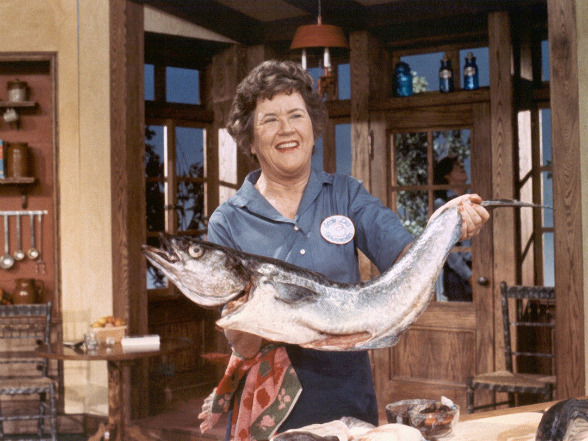
ImageIf you’ve ever watched “The Cooking Channel”, you’ve probably heard the term “reduction cooking”. This culinary process involves heating a liquid such as a stock or a sauce on the stove, uncovered. As the mixture simmers, various ingredients will evaporate at different rates allowing the remaining flavors and ingredients to become more concentrated.

In life, this process is not unlike “trial by fire.”

All of us experience trials of some sort, some of us certainly more than others. Many of us have lost partners and seen the break-up of marriages. We’ve lost homes and incomes and insurance. We’ve had health scares. We’ve lost parents and children.

We’ve lost much of ourselves, too, but were usually too busy to notice…

I don’t have to tell you this is a scary place, but what I do want to assure you is that there is no need to be afraid. This process of “trial by fire” has a secret and often overlooked component. In the midst of having to give up so many false forms of security, we’ve found surprising strength in places we didn’t even know we had. We have discovered an inner resilience, the ability to learn and excell at new skills, the ability to take a situation at face value. We have found that even stripped of much that we hold precious, we are still standing, only a little worse for wear. We’ve found support from all four corners of our lives because during those years we were serving on committees, dropping by food when someone was sick, babysitting a friend’s kid- we were really building relationships that have nothing to do with the business of life but everything to do with our own foundation.

Still, I’d be lying to you if I said I didn’t enter this new phase of my life greatly humbled and a little disappointed. I thought by now I’d have it all together. Surely, my 401-K would have another digit. Couldn’t I at have at least maintained my lifetime membership in Weight Watchers? Shouldn’t I have learned to wash the dishes as I go rather than letting them pile up in the sink? As a respectable adult, wouldn’t I floss my teeth every single night? Somehow, I thought I would have acomplished so much more by now. I thought I would be so much “better”.

I was talking with a friend the other day and she questioned the wisdom of our desire to grow up into those stereotypical versions of older age, you know- the “old and wise”-  that we thought we were supposed to. I mean, sure, we need our 401-K’s and our teeth but does some of the stuff in between really matter?

What if the secret to growing old is really growing ourselves young? Remaining vital is willing ourselves to stay vulnerable, to stay silly, to continue to love and have faith in the hard parts and to not take life too seriously? I mean it is “life” and when it’s not, it just isn’t anymore. Maybe in our ideas about growing older, we have it all wrong. 

How do we grow young?

I can tell you by what I’ve seen. We endure. We discover we can adapt. We go on. 

I’ve seen a new beauty emerge in my friends. It’s not the same type of beauty as when we were young and had unblemished skin, flat tummies and breasts that didn’t sag.  This is a reduction cooking type of beauty. An essential and deeper beauty that leaves behind the extraneous and radiates outward like a tall strong tree in the forest, a weathered rock, the scent of fresh cucumber and grated ginger, and a sunrise. It’s a glow that comes from within.

It has nothing- and everything- to do with the temperature.

Fearless

ImageFearless…”

That’s what my good friend called me recently. “Look at what you did this past year,” she said. “You went up in a sail plane. You snorkeled over a shark. You’re not afraid to try new things. You put yourself out there all the time. Oh, and remember that time you went hiking by yourself in the alps and were almost mauled by wild goats?”

If she didn’t think I was afraid of those goats, she was dead wrong…

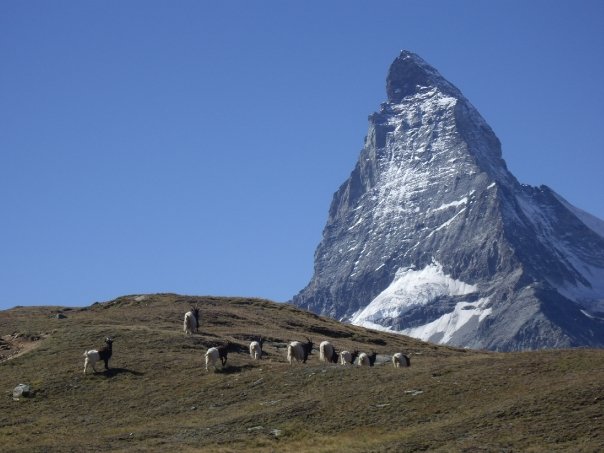
Several years back, I was fortunate to travel through Switzerland with my sister and brother-in-law. We took a slow-moving scenic cog train up the mountain Gornergrat, one of many tall peaks surrounding the famed Matterhorn. After we had completed our sightseeing, we boarded the train for our descent back to the village of Zermatt. The conductor announced that one of the upcoming stops featured a short hike to a pristine glacial lake where the Matterhorn could be viewed in perfect reflection. Thinking what a fabulous photo opportunity this would be, I impulsively assured my sister that I would be fine hiking across the open terrain and so I fled the train alone.

With the great Matterhorn in front of me as a guide, I trekked rolling green meadows with a Julie Andrew’s soundtrack playing in my head, “the hills are a-live, with the sound of mu-sic…” I meandered along worn zig-zagged paths across the alpine meadow, taking snapshots of unique colorful wildflowers and interesting lichens growing on the numerous rocks scattered along the terrain. I began to notice strange pellets on the ground. Having seen no wildlife, my curiosity was piqued as to what animal might have produced it. Placing a credit card on the ground for scale, I snapped a photograph, intending to ask one of the guides to help me identify it when I reached the base of the mountain.

I ascended each small rolling hill expecting to find the lake on the other side, but instead I only found more hills. I began to tire; I had walked for a long time. The light was beginning to soften as the sun shifted lower in the sky. I conceded that I was never going to find the lake. Discouraged, I turned around and began to hike back up the mountain in the general direction I had come. As I ascended another small knoll, I suddenly found myself standing face to face with a large herd of wild mountain goats, perched on a slight rocky ridge about 15-20 feet in front of me.

Quickly, I began a mental assessment of the situation. Had anyone ever been attacked by wild goats? I didn’t think so, but I wasn’t certain.Then, my eyes met the stare of a large shaggy male standing in the middle of the others. His long horns curved up impressively like a sneer; he was obviously the leader. He stopped chewing grass momentarily, sizing me up, a middle aged woman whose only possessions were the hiking clothes on her back, a credit card in her pocket and a camera with photos of mountains, wildflowers and goat scat.

There was no where for me to go except “away”. I backed up in as calm and as nonthreatening a manner as possible. Panic began to ripple throughout the herd as they nervously shuffled amongst each other; babies bleated pitiful calls for their mothers. The angry male began to navigate the rocky bluff on  sure-footed hooves; the herd obediently followed. Then, with a toss of his head, he led the herd trotting past me, descending the mountain in the same direction from which I had come. With my adrenaline pumping I breathed a sigh of relief.

I was safe.

I have been fortunate. My whole life, I had only known fear in fleeting moments. Perhaps that is why I didn’t recognize it when years later, it appeared to me in the form of anxiety, sitting uncomfortably by my side for months on end. I tried to push it away, but it wouldn’t budge; my efforts to resist only seemed to pull me further down.

I was vaguely aware that something in my life wasn’t working, but I wasn’t sure what it was. I was fifty years old and exhausted. I had become like a machine, going through the motions of life. It took so much effort just trying to keep all the balls in the air, something I did because I thought I had to. Some of the balls were mine, but many belonged to other people; I had simply picked them up as they rolled by and added them to my stack without thinking. My feelings inside had been ignored for so long, I didn’t know how to feel them anymore. My fuse grew short. I felt trapped and lashed out. I spouted anger and blame.

I felt broken. I was broken.

Then, with that small act of surrender, the strangest thing happened. Immediately, I felt better. Imagine… feeling broken actually felt better than trying to not feel broken. Changes, something emitting from my heart, began to seep from my pores and rise to the surface. I found I could no longer live in denial. The truth was revealed to me in the form of a question.

What was I afraid of?

I was afraid of so many things. I was afraid of dropping the balls. I was afraid of failure. I was afraid of being trapped in a life that didn’t work for me. I was afraid of being seen as a fool, my shame a secret exposed for the world to see. You see, I’d begun to realize I’d made a big mistake. I had handed over my power to other people, institutions and circumstances that did not have my best interest in mind. The success I had pursued, every pat on the back, every item I had checked off my list of accomplishments, ultimately betrayed me us when the sense of achievement they afforded me was something false- a feeling not unlike immortality. My ego had begun taking credit for what is really grace.

How I’d forgotten that feeling of being safe and cocooned by God’s love. I’d forgotten that life itself calls us to step out in faith, not to withdraw. I had to be broken to remember the truth that God is with us and within us all the time. I had to stop running and be still. I had to stop and breathe. As I began to relinquish control over people and situations that were causing my anxiety, and to try to meet them with an open heart, they lost much of their power and influence over me. I let go and the sky did not fall!

I have begun this new journey in mid-life. I refuse to live a life of fear. This is not only my journey, it’s our  journey. From author Elizabeth Lesser:

“Things do fall apart. It is in their nature to do so. When we try to protect ourselves from the inevitability of change, we are not listening to the soul. We are listening to our fear of life and death, our lack of faith, our smaller ego’s will to prevail. To listen to your soul is to stop fighting with life–to stop fighting when things fall apart; when they don’t go our away, when we get sick, when we are betrayed or mistreated or misunderstood. To listen to the soul is to slow down, to feel deeply, to see ourselves clearly, to surrender to discomfort and uncertainty and to wait.”

Welcome to My New Blog Site

My main website at Skirt.com was recently closed, so I decided to open my own site on WordPress. Here you will find links to other sites where I am published (such as my radio broadcasts), pictures, and more information about me. Use the buttons on the right to follow me either here or in your email. Thank you for reading!

Blog at WordPress.com.

Up ↑